Basilique cathédrale
Saint-Denis
Iwas tasked in a course to write about the choir in Basilique Cathédrale Saint-Denis. While I wrote a three-page run, I think the rest of the Cathédrale also deserves some writings. So, here is something and things I found out about Basilique Cathédrale Saint-Denis, written by me, the first entry in my Seiken essays.
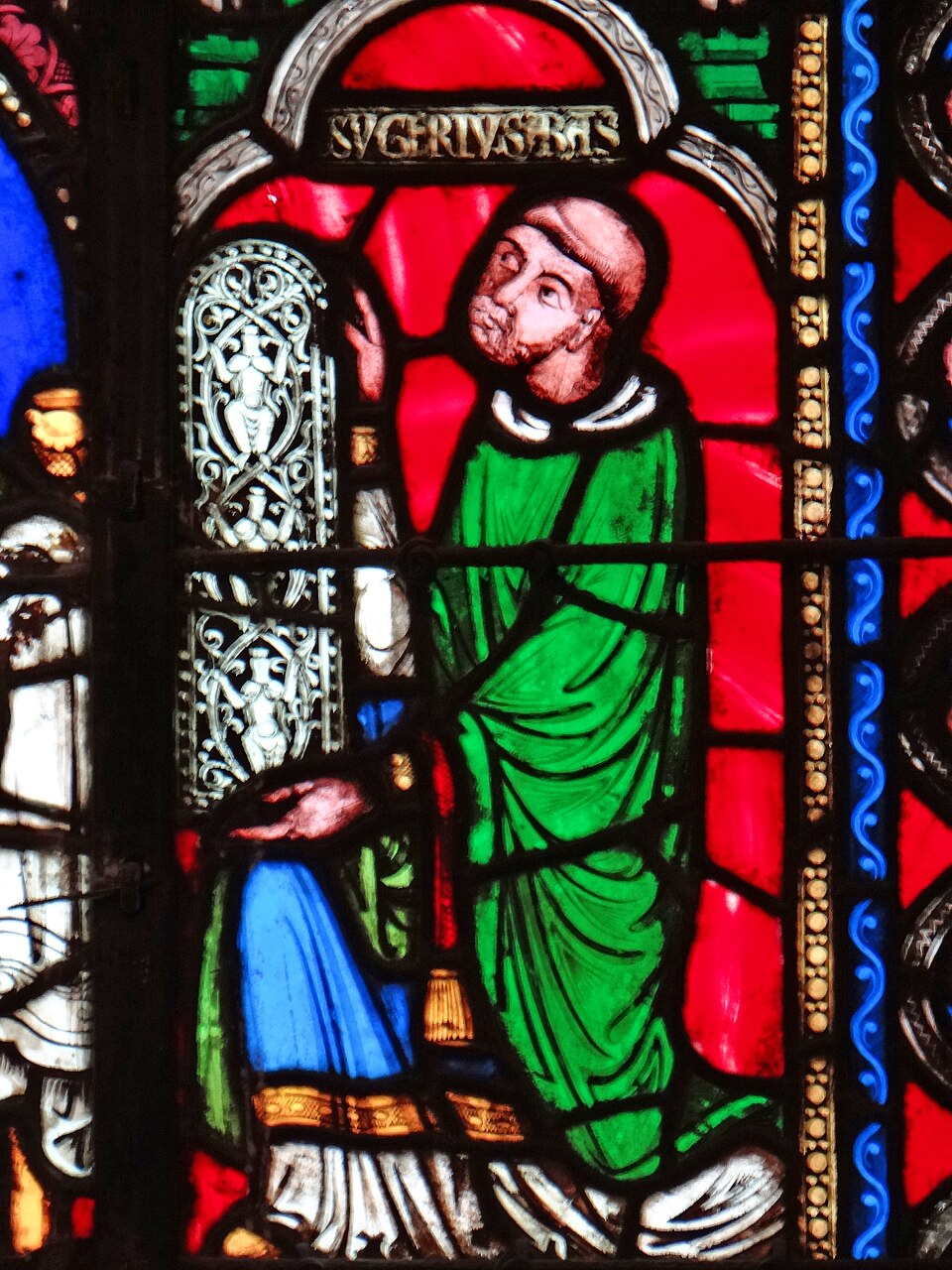
As part of the expansion of the abbey of Saint-Denis, a major construction site of nascent Gothic art, the influential Abbé Suger (1122–1151) gave a major place to the art of stained glass. Suger was advisor to two kings, Louis VI and Louis VII, but the man was obsessed with light. He wanted to turn stone into something luminous, and he did. The choir he completed in 1144 is widely considered the first structure to employ all the elements of what we now call Gothic architecture. An optical revolution, really.
The various radiating chapels of the chevet were fitted with immense colored glass windows. Suger had recourse to the best artists and master glassmakers of the region. Coloured glass was very rare in the Middle Ages. The stained glass windows would have cost more than the building's stone construction itself. Think about that for a second. The glass was worth more than the walls holding it up.
The earliest windows, put in place before 1144, illustrate connections between scenes from the Old Testament and the New Testament through Christ, who is the connecting link. This panel here comes from a bay of the Life of Saint Benedict for the Benedictine abbey church. It represents the final scene of the life of the saint, patron saint of the order: his ascent to heaven. The colours are something else. Deep blues, reds, greens, all held together by lead and faith.
The Tree of Jesse is one of the most famous windows Suger commissioned, around 1140. It shows the genealogy of Christ rising from a sleeping Jesse, branches and figures climbing upward through glass. This is the oldest known complex form of the Jesse Tree in stained glass. It was partially rebuilt in the 19th century under Viollet-le-Duc, but the bones of it are still 12th century. The idea of depicting a whole lineage in light, vertically, so that you read it by looking up. That's design thinking before the term existed.
What I find interesting is how these windows were not just decoration. They were the primary way most people encountered scripture. You couldn't read, but you could look up and see the whole story in light. Suger understood that. He transformed the abbey into a veritable temple of light, and the effect must have been overwhelming for someone walking in from the dark medieval streets outside.
Suger's great innovation in the ambulatory was the replacement of heavy dividing walls with slender columns. The interior of that part of the church was suddenly filled with light. Rib vaults forming pointed arches supported the ceiling, allowing for an openness that also permitted a virtually uninterrupted view of the stained glass. The dark Romanesque nave was later rebuilt using the latest techniques, in what is now known as Rayonnant Gothic. This new style reduced the wall area to an absolute minimum. More glass, less stone. Always more glass.
The 12th century originals were actually removed in 1997, too fragile to stay. They were restored, but couldn't go back. In 2023, splendid copies in glass were installed, giving the chevet its full splendour again. So if you go now, what you see is new glass made to look like 900-year-old glass, which is its own kind of beautiful continuity.
The rose windows are maybe the most striking thing when you walk in. Huge, 12-meter-wide compositions at the ends of the transepts. The north one is above. These were not part of Suger's original work but came later, when the nave was rebuilt in the 13th century. Still, they carry the same spirit. The same conviction that a building should be made of light as much as stone.
Saint-Denis is also the burial place of nearly every French king and queen. 42 kings, 32 queens, 63 princes and princesses. The tombs are scattered through the nave and transept, stone effigies lying in rows. Some are simple slabs, others are elaborate monuments like the tomb of Louis XII and Anne of Brittany, commissioned in 1515. The gisants, the recumbent figures, were badly damaged during the Revolution but most were restored by Viollet-le-Duc around 1860.
There's something quietly powerful about a building that holds both the dead kings and the light Suger chased. The whole place is layered. Merovingian foundations, Carolingian walls, Gothic vaults, revolutionary damage, modern restoration. Centuries compressed into one space. You walk through and you feel it, even if you can't name it. That's the thing about medieval buildings. They don't explain themselves. They just are.